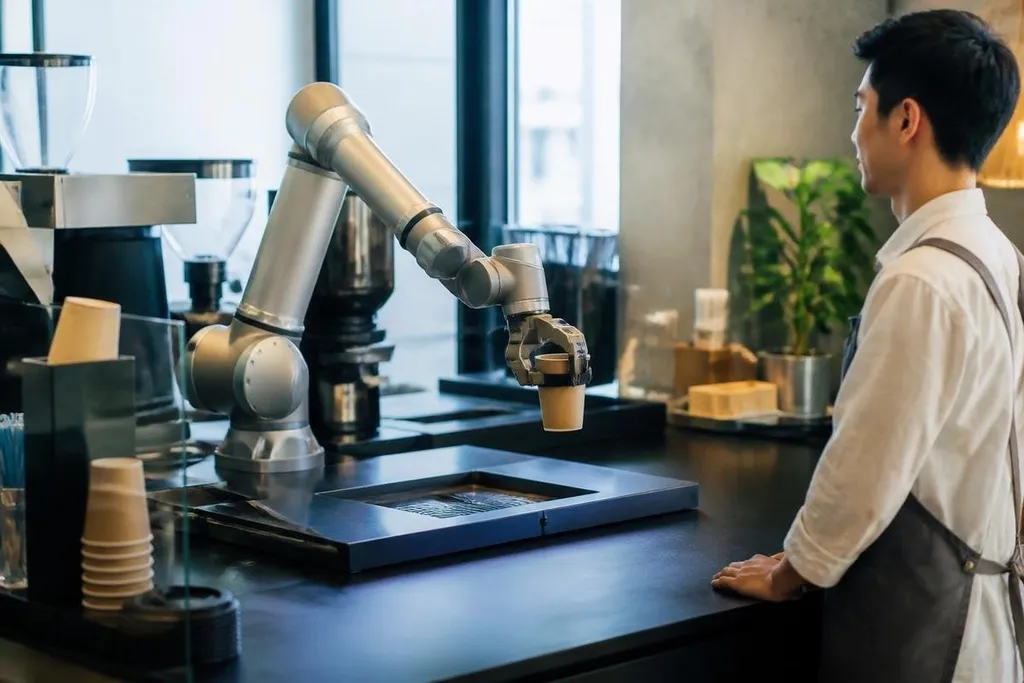
A robot barista can repeat the same drink steps for hours, but it still needs a carefully planned counter and a person nearby. For a coffee-shop owner, the real question is where the robot removes work and where it adds new tasks.
- Repeated drink steps suit robotic arms
- The counter needs fixed cup, milk, and syrup locations
- Staff still handle cleaning, faults, and unusual orders
What a robot barista actually does
Most robot baristas are built around a robotic arm, drink equipment, sensors, and software. The arm moves a cup between set points while other hardware dispenses coffee, milk, water, or flavoring.
That setup works best when every item stays in a known place. A cup arrives at the same position, the milk line reaches the same nozzle, and the finished drink moves to a fixed pickup area. The robot repeats those steps with the same motion each time.
This is a different job from making any drink a customer can describe. A fixed menu helps the system work because the software can match each order to a known recipe and motion path. A large menu adds more ingredients, tools, cleaning steps, and chances for a delay.
The arm also needs feedback. Cameras, weight sensors, or other checks can help it detect a missing cup or a badly placed item. When the system cannot confirm the next step, it should stop and ask a person to check the counter.
Where shops may gain time
Repetition is the clearest fit. A robot can take on drink steps that follow the same order, while staff handle payment, questions, food, and problems that need judgment.
That division may matter most during a busy period. A worker who no longer pours every drink can spend more time restocking cups, checking orders, or speaking with customers.
The result depends on the whole counter, though. If workers must refill the robot after every short run, the robot has moved the work rather than removed it.
Cleaning creates another test. Coffee grounds, milk, syrup, and water can reach the same surfaces that make the drinks. Any shop considering a robot needs a clear cleaning plan, including who removes residue, how often parts are washed, and what happens when a food-contact part needs replacing.
A drink reaching the counter still leaves open who loads milk, clears grounds, and handles faults. Robot24.com robotics reporting can put those tasks beside claims about a barista robot’s speed and drink range. The next question is what the demo leaves out.
The limits behind the demo
A staged drink is a narrow test. A real shop adds changing queues, dropped cups, blocked sensors, new staff, supply gaps, and customers who change an order at the counter.
Safe spacing around people is another requirement. The arm must stop when someone reaches into its work area, then restart in a controlled way. That can slow service when the counter is crowded. A human worker can move around a small obstruction; a robot may need a pause and a new instruction.
Maintenance affects the daily result as much as arm speed. A blocked nozzle, loose cup stack, or software fault can stop the drink line. Staff need training for these events, and the shop needs a way to serve customers when the robot is offline.
There is also the question of the customer experience. Some people may enjoy watching a robot prepare a drink. Others may want a quick order and a person who can answer a question about ingredients. The shop still owns that choice, even when the robot handles the cup.
What the cost decision should include
The purchase price is only one part of the calculation. A shop must count the robot, drink equipment, installation, software fees, service, staff training, cleaning time, and lost sales during faults.
The right comparison is the task, not the machine alone. If the robot handles a steady set of drinks for long periods, its work may be easy to measure. If the menu changes often or service depends on conversation, a conventional counter may fit better.
I'd skip a robot barista if the shop can't keep its ingredients, cups, and pickup area in fixed positions. The robot needs that order around it, and a small shop may spend too much staff time keeping the system ready.
A practical buying check
Before signing a contract, check these points on the proposed counter:
- Count the drink steps: write down every handoff across the service process, including milk, lids, and cleanup.
- Test the menu: run the drinks that sell most, then add one order with a change or missing ingredient.
- Assign fault work: name the person who handles a blocked nozzle, misplaced cup, or stopped arm during service.
- Measure cleaning: record the parts that touch food and the time needed to wash or replace them.
- Plan offline service: decide how staff take orders and make drinks when the robot is unavailable.
That check turns a robot barista from a counter display into a work decision. The next useful number is the shop's own share of repeat drinks, cleaning time, and robot downtime; without those figures, the business case is still unproven.